
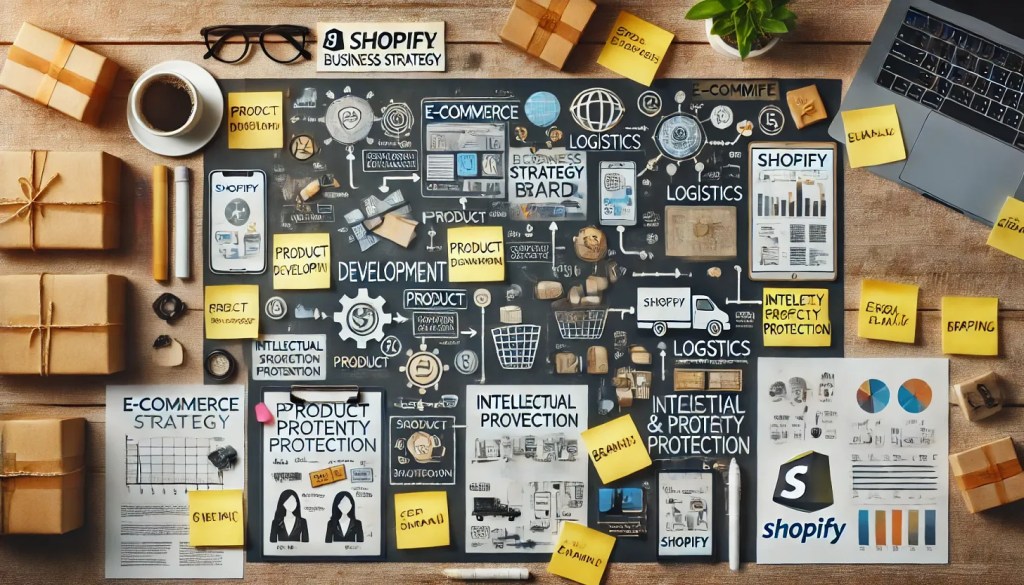
So, you’ve got an idea—maybe it’s a game-changing gadget, sustainable clothing line, or a viral-worthy kitchen tool. You’re ready to build your e-commerce empire, but here’s the truth: launching a successful product isn’t a sprint, it’s a marathon.
In 2025, the digital marketplace is more competitive than ever. Whether it’s validating your idea, protecting your intellectual property, or building an unshakable brand, every step counts. So, let’s break it down—10 essential steps to take your product from concept to checkout.
1. The Big Idea & Market Research: Does Anyone Actually Want This?
Before spending a dime on development, validate your idea.
✅ Find Your Audience: Identify who your customers are—age, income, habits.
✅ Run Surveys & Focus Groups: Get real feedback, not assumptions.
✅ Scope Out Competitors: Spot weaknesses you can capitalize on.
✅ Trendspotting: Check Amazon bestsellers, Etsy trends, and TikTok must-haves.
⚖️ Legal Tip: Use an NDA (Non-Disclosure Agreement) when sharing your idea with others to protect your intellectual property.
🛡️ The AK Takeaway: Your idea is your spark, but validation is the fuel that keeps the fire burning. Too many entrepreneurs fall into the trap of building a product they think people want instead of what customers actually want.
Document everything—your sketches, emails, brainstorming sessions. Why? Because these records act as a digital paper trail of your ownership. If disputes ever arise (and they often do), your documentation could be your saving grace.
Remember: A well-validated idea doesn’t just build confidence—it builds momentum. Don’t skip this step, even if it feels slow. Trust me, it’s worth it.
2. From Scribbles to Something Real: Design & Prototyping
Time to turn your idea into something tangible.
✅ Digital Design: Use CAD software for precise 3D models.
✅ Physical Prototyping: Start small with 3D printing or local batch runs.
✅ Stress Testing: Test durability, usability, and practicality.
✅ Iterate: Use flaws as feedback—refine, improve, repeat.
⚖️ Legal Tip: File a Provisional Patent Application early to secure your “Patent Pending” status.
🛡️ The AK Takeaway:
Here’s the truth: your first prototype will probably suck—and that’s okay. Most great products didn’t start out perfect; they started out functional.
Your prototype isn’t just a test of your product—it’s a test of your commitment. Every flaw you fix is a step toward something better.
Think of prototyping as controlled failure: The more you fail now, the fewer surprises you’ll face in full-scale production.
Oh, and one more thing: Don’t skip the legal stuff. Patents might feel intimidating (or expensive), but trust me—protecting your intellectual property at this stage isn’t optional. It’s an investment in your future success.
When in doubt, ask yourself: “If someone copied this tomorrow, would I be ready to fight back?” If the answer is no, it’s time to call me.
3. Protect Yo’ Self: Intellectual Property (IP)
Your product is your baby. If you don’t protect it, someone else will claim it.
✅ Utility Patents: Protect functionality.
✅ Design Patents: Protect the product’s appearance.
✅ Trademarks: Guard your brand name, logo, and slogan.
✅ Copyrights: Secure manuals, packaging, and marketing materials.
⚖️ Legal Tip:
Amazon and Shopify take IP seriously. Having patents and trademarks makes enforcement much easier.
✅ 1. Utility Patent: Protect How Your Product Works
A Utility Patent protects the functionality of your product. It covers how it works, what it does, and the specific processes involved.
- If your product solves a unique problem or operates in a new way, a utility patent is your first line of defense.
- Example: A self-cleaning water bottle mechanism or a collapsible travel mug with a unique locking system.
🛡️ Key Tip:
File a Provisional Patent Application early. It secures your “Patent Pending” status and gives you a 12-month window to file a full patent application.
✅ 2. Design Patent: Protect How Your Product Looks
While utility patents protect how something works, Design Patents protect how something looks. If your product’s appearance is unique, eye-catching, or contributes significantly to its market appeal, a design patent is a must.
- Example: The shape of an ergonomic chair or the sleek design of a smartphone stand.
- These are especially useful for products where the visual appeal is a big selling point (hello, Instagram-worthy aesthetics!).
🛡️ Key Tip: Design patents are often overlooked, but they’re powerful tools for combating cheap knockoffs that look like your product but cut corners on functionality.
✅ 3. Trademarks: Protect Your Brand Identity
A trademark protects your brand name, logo, and slogan. It ensures your customers can easily recognize your products and prevents others from imitating your branding.
- Example: The Nike swoosh, Apple’s bitten apple logo, or McDonald’s iconic golden arches.
- Trademarks are especially important for building trust and brand loyalty—customers need to know they’re buying the real deal.
🛡️ Key Tip: Trademarks aren’t just for big corporations. Even if you’re a solo entrepreneur with a Shopify store, a trademark can save you from brand identity theft.
✅ 4. Copyrights: Protect Creative Assets
Copyrights protect creative assets tied to your product, such as:
- User manuals
- Product packaging designs
- Marketing materials
- Instructional videos
If someone copies your original artwork, photography, or written content, a copyright gives you the legal backing to take action.
🛡️ Key Tip: Copyrights are automatic when you create something original, but official registration strengthens your ability to enforce your rights in court.
Legal Tip:
E-commerce giants like Amazon, Shopify, and Etsy take IP protection seriously, but only if you have the right documentation. When counterfeit products or hijackers pop up, platforms will ask for proof—your patents, trademarks, and copyright registrations.
🛡️ The AK Takeaway:
Think of intellectual property protection as your product’s seatbelt and airbag rolled into one.
- Utility Patents guard your product’s function.
- Design Patents guard your product’s style.
- Trademarks guard your brand’s identity.
- Copyrights guard your creative assets.
Sure, you might drive down the e-commerce highway without them and be fine—until a counterfeit truck sideswipes you out of nowhere.
IP protection doesn’t guarantee smooth sailing, but it does give you the power to fight back if things get messy.
If you’re serious about your product, invest in your IP early. It’s not just a legal checkbox—it’s business armor.
4. The Power of Trademarks: Your Brand’s Best Friend
Your trademark isn’t just a logo—it’s your brand’s legal armor.
✅ Brand Recognition: Build trust and loyalty through consistent visuals and messaging.
✅ Legal Protection: Stop competitors from using similar branding.
✅ Amazon Brand Registry: Gain control over listings and remove counterfeit products.
✅ Shopify & WooCommerce: Protect your domain name and branding online.
⚖️ Legal Tip: File your Trademark Application early—don’t wait until after launch.
Why Trademarks Matter:
✅ 1. Brand Recognition:
Your trademark is the face of your brand. It tells customers who you are and builds trust over time.
- Think of the Nike swoosh or Coca-Cola’s red-and-white design.
- A strong trademark makes your product instantly recognizable.
✅ 2. Legal Protection:
A registered trademark gives you exclusive rights to your brand name, logo, and slogan.
- You can stop competitors from using similar branding.
- You can take legal action against trademark infringement.
✅ 3. Stop Copycats:
Trademark protection helps you act quickly against unauthorized sellers and counterfeiters.
- Without a registered trademark, enforcement is an uphill battle.
Benefits for E-Commerce Platforms:
✅ Amazon Brand Registry:
A registered trademark unlocks Amazon Brand Registry, giving you access to powerful tools:
- Remove counterfeit listings with ease.
- Control your product listings and stop hijackers.
- Add A+ Content to product pages for better branding and storytelling.
✅ Shopify & WooCommerce:
With a trademark, you can:
- Secure your store’s domain and branding.
- Stop fake Shopify or WooCommerce stores from copying your name or logo.
- Build trust with customers who recognize your protected brand.
What Can You Trademark?
- Your brand name (e.g., Starbucks).
- Your logo design (e.g., Adidas’ three stripes).
- Your slogan (e.g., McDonald’s “I’m Lovin’ It”).
- Your trade dress (unique packaging design or product presentation).
Legal Tip:
File your trademark application early—don’t wait until after you’ve launched your product. If someone else trademarks a similar name first, you could lose the rights to your own brand.
🛡️ The AK Takeaway:
In the world of e-commerce, your trademark isn’t just legal protection—it’s a competitive advantage.
- On Amazon, it unlocks tools that keep hijackers away and give your brand credibility.
- On Shopify, it stops fake stores from stealing your customers.
A trademark is more than a logo—it’s your promise to your customers.
And when your promise is backed by legal protection, your business isn’t just another online store—it’s a brand.
When you’re ready to trademark your name, logo, or slogan—I’ve got your back.
5. The Manufacturing Maze: Where Will Your Product Be Made?
Your manufacturer isn’t just a vendor—they’re a partner.
✅ China: Scalable, cost-efficient, but tariff-heavy.
✅ Vietnam & Thailand: Great for electronics and apparel.
✅ Mexico (USMCA Agreement): Low tariffs, fast shipping, closer oversight.
✅ India: Ideal for textiles and growing in tech manufacturing.
Key Considerations:
- Quality Control: Regular inspections and audits.
- Production Timelines: Can they scale during demand spikes?
- Transparency: Clear communication channels.
⚖️ Legal Tip: Have a Manufacturing Agreement that covers quality, deadlines, and IP protections.
🛡️ The AK Takeaway:
Cost matters, but trust matters more. Vet your manufacturer thoroughly, and always have a strong legal agreement in place.
6. Your Online Store: Amazon, Shopify, or DIY?
Your storefront is your digital handshake with customers.
✅ Amazon: Massive reach, but steep fees.
✅ Shopify: User-friendly and brand-focused.
✅ WooCommerce: Maximum customization for WordPress users.
✅ Custom Website: Ultimate creative freedom, but higher costs.
⚖️ Legal Tip: Include Privacy Policies, Terms of Service, and Return Policies to cover your bases.
🛡️ The AK Takeaway:
Your platform sets the stage for your success. Whether it’s Amazon’s audience or Shopify’s brand-building tools, choose what fits your goals—and keep it legally secure.
7. Logistics & Supply Chain: Get It There Fast
Shipping delays aren’t just bad—they’re business killers.
✅ Inventory Management Software: Avoid costly stockouts.
✅ Reliable Shipping Partners: Amazon FBA, ShipBob, or local 3PL providers.
✅ Return Policies: Transparent and customer-friendly.
⚖️ Legal Tip: Add Confidentiality Clauses to logistics contracts to protect sensitive business data.
🛡️ The AK Takeaway:
Logistics builds—or breaks—trust. Get it right, and customers will love you. Get it wrong, and they’ll remember.
8. Build a Brand People Obsess Over
Your product sells once. Your brand sells forever.
✅ Logo & Slogan: Make it memorable (Nike’s “Just Do It”).
✅ Trade Dress: Unique packaging design.
✅ Voice & Tone: Stay consistent across social media, website, and emails.
⚖️ Legal Tip: Trademark your brand name, logo, and slogan early.
🛡️ The AK Takeaway:
Superfans don’t just buy—they promote. Build a brand that’s bigger than your product.
9. Launch Time, Baby!
Time to hit “Go Live.”
✅ Social Media Campaigns: Run ads, create buzz.
✅ Influencer Partnerships: Choose authentic voices for promotion.
✅ Email Marketing: Build anticipation and offer launch-day exclusives.
⚖️ Legal Tip: Follow FTC Guidelines for influencer partnerships and truthful advertising.
🛡️ The AK Takeaway:
Your first launch won’t be perfect—and that’s okay. Learn, adapt, and grow.
10. Protect Your Turf: Monitor & Enforce Your IP
The more successful you become, the more copycats will emerge.
✅ Amazon Brand Registry: Remove counterfeit listings.
✅ Monitor Marketplaces: Watch Amazon, Etsy, and eBay regularly.
✅ Cease & Desist Letters: Act fast on infringements.
✅ Legal Action: Be ready to escalate if needed.
⚖️ Legal Tip: Build a monitoring system and partner with an IP attorney.
🛡️ The AK Takeaway:
Protecting your IP isn’t a one-time task—it’s a lifestyle. Stay vigilant, act swiftly, and lean on legal expertise when things get messy.
Final Word from The AK Takeaway:
E-commerce success isn’t luck—it’s strategy. Every step, from validation to logistics to IP protection, builds your empire brick by brick.
Need guidance at any stage? I’ve got your back.
Alexander R. Karana, Esq. Patent & Trademark Attorney | Business Advisor | President, Assyrian American Bar Association | Treasurer, Chaldean American Bar Association
📧 Alexander.Karana@vonbriesen.com
📞 331-399-1840
Disclaimer:
This article is for informational purposes only and does not constitute legal advice or create an attorney-client relationship. The information provided is general in nature and may not address specific legal issues or circumstances. Readers are encouraged to seek professional legal counsel tailored to their unique business needs before taking any action based on the content of this article.